Trusted PropTech Intelligence

Prop Trading Technology
Insights & Analysis

Your authoritative resource for prop trading technology and PropTech market intelligence. Expert analysis, platform comparisons, and industry trend reports — all in one place.
16+
Expert Articles
20+
Topics Covered
50+
Prop Firms Reviewed
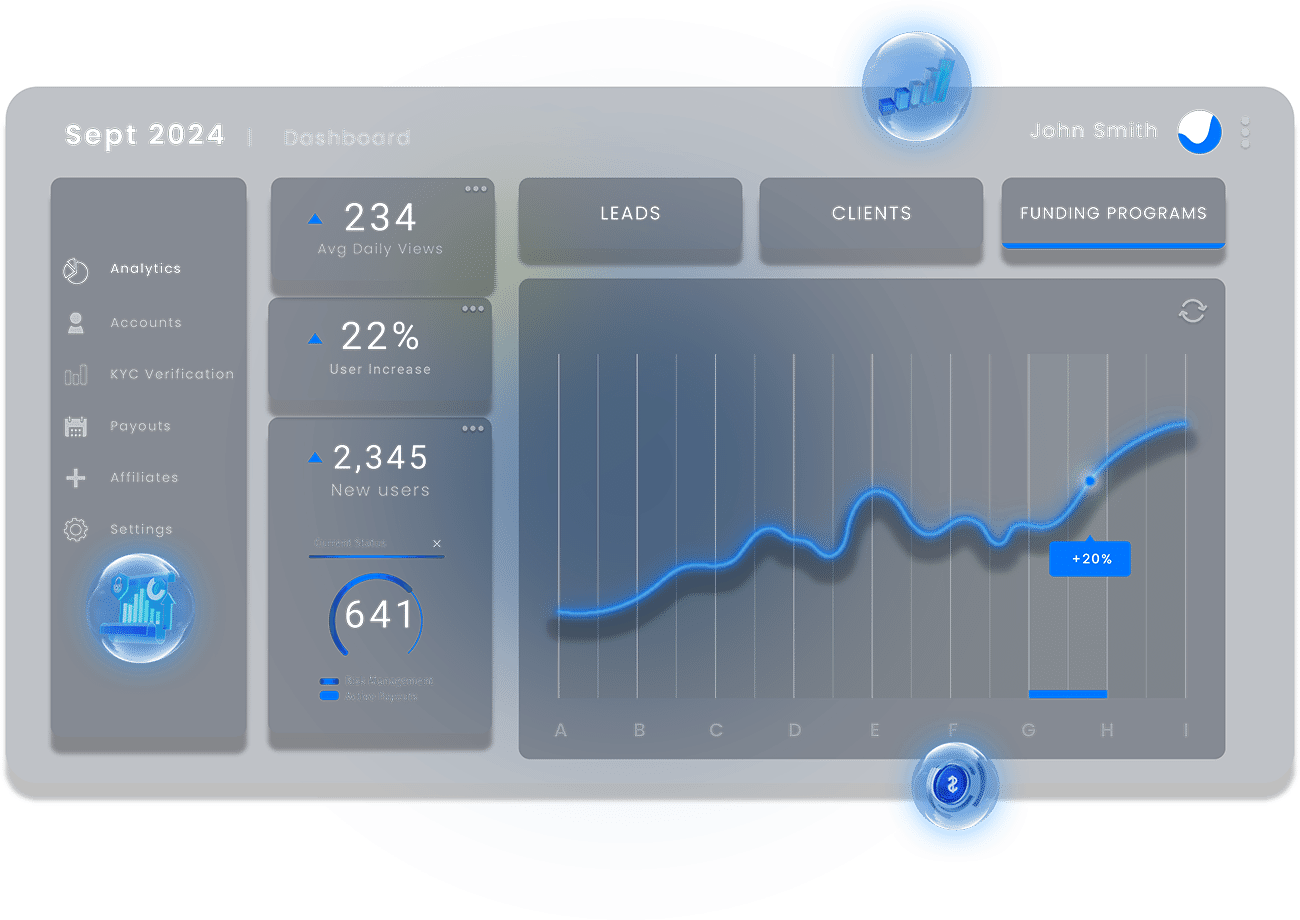
Prop Trading Dashboard
Expert Analysis
In-depth research and reviews on leading prop trading platforms and PropTech solutions.
Market Trends
Stay ahead with real-time insights on evolving PropTech markets and trading technology trends.
Verified Data
All content is fact-checked and verified against primary sources for accuracy and reliability.
Unbiased Reviews
Independent evaluations of prop firms, trading tools, and technology platforms without conflicts of interest.

Trusted by Traders & Researchers

Comprehensive data and expert analysis powering prop trading intelligence.

16+
Expert Articles
50+
Prop Firms Reviewed
20+
Topic Categories

Stay Ahead in Prop Trading Technology

Get the latest insights, platform reviews, and market intelligence delivered directly to your research.

Get in Touch
About PropTradingTech

Your Prop Trading Knowledge Hub

In-depth analysis of prop trading technology infrastructure, platform connectivity, and the systems that power modern funded trading operations.

Understanding Prop Trading Technology
Essentials

Proprietary trading technology encompasses the entire stack that powers modern funded trading operations — from execution infrastructure and risk engines to trader-facing dashboards and back-office automation. The technology choice determines operational capacity, trader experience, and ultimately, profitability.

In 2026, the global prop trading technology market is valued at approximately $1.8 billion, serving an estimated 800+ active prop firms worldwide.

The Technology Stack Explained

A complete prop trading technology stack consists of four interconnected layers, each critical to operations:

LayerComponentsFunction
ExecutionMT5, cTrader, DXtrade, bridgesTrade routing and platform connectivity
Business LogicChallenge engine, risk engineRule enforcement and account management
DataMarket data feeds, trade databasesReal-time and historical data processing
PresentationTrader dashboard, admin panel, CRMUser interfaces and reporting
Architecture Principle

The best prop trading systems use event-driven architecture where every trade, equity change, and rule breach generates events processed in real-time. Polling-based systems that check rules on intervals (even every second) can miss critical breaches during fast-moving markets.

Build vs. Buy: The Perennial Question

Only about 15% of prop firms run entirely custom-built technology. The remaining 85% use some combination of white-label platforms, SaaS tools, and custom integrations. The decision matrix comes down to three factors: available capital, technical team capabilities, and time-to-market requirements.

$1.8B
Market Size 2026
800+
Active Prop Firms
85%
Using External Tech
Market sizing from FinTech Global Intelligence and PropTrading.com Annual Report 2025.
Modern trading technology infrastructure and servers
Trading Platforms & Infrastructure
Technology

MetaTrader 5 remains the dominant platform with 68% market share among prop firms, but the landscape is shifting. cTrader has grown to 22% share, DXtrade is capturing the crypto-prop segment, and Match Trader is emerging as a cost-effective alternative with built-in prop firm features.

Platform Comparison for Prop Operations

PlatformMarket ShareStrengthsProp-Specific Features
MetaTrader 5~68%Massive trader base, ecosystemVia plugins/bridges
cTrader~22%Modern UI, cAlgo, FIX APIBuilt-in copy control
DXtrade~5%Customizable, multi-assetNative prop modules
Match Trader~3%Low cost, modern stackBuilt-in prop engine
TradeLocker~2%TradingView charts, mobileIntegrated challenges

Bridge Technology

Bridges connect your business layer to trading platforms. Quality matters enormously: a bridge with 100ms latency means your risk engine sees trades 100ms after execution — enough time for a trader to rack up significant losses beyond drawdown limits during volatile markets.

Infrastructure Tip

Deploy your risk engine and bridge on the same server or data center as your trading platform server. Network latency between these components should be under 5ms for reliable real-time risk management.

Risk Management Technology
Risk Control

Risk management technology is the most critical component of any prop firm's stack. It is the system that prevents a single trader's blown account from becoming a five-figure loss for the firm. Get this wrong, and no amount of marketing or trader acquisition will save the business.

Real-Time Monitoring Architecture

Enterprise-grade risk engines process equity updates on every tick, comparing the current account state against configured rules. The processing pipeline follows a strict sequence:

  • Receive trade event or equity update from bridge/platform
  • Calculate current drawdown metrics (daily, overall, trailing)
  • Compare against rule thresholds (warning at 80%, breach at 100%)
  • Execute action: alert, restrict new trades, or force-close positions
  • Log event to audit trail with millisecond timestamp
< 50ms
Breach Detection
99.97%
Target Uptime
100%
Audit Coverage

Rule Configuration Flexibility

Rule TypeStandard RangeImplementation
Daily Loss Limit3-5% of balanceReal-time equity monitoring
Max Drawdown8-12% of initial balanceHigh-water mark tracking
Trailing DrawdownFollows profit peaksEOD or intraday modes
Min Trading Days5-10 per phaseCalendar day counting
News Restriction±2-5 min of eventsEconomic calendar integration
Weekend HoldingNo positions over weekendFriday close enforcement
Architecture Warning

Never run risk calculations on the same thread as trade processing. A spike in trading volume that saturates the execution pipeline should never delay risk checks. Use dedicated, isolated processes for risk monitoring.

AI machine learning analytics for trading operations
AI & Machine Learning in Prop Trading
Innovation

AI integration is moving from nice-to-have to competitive necessity. Prop firms deploying machine learning report 25-40% improvements in fraud detection, 15-20% better trader screening accuracy, and significant reductions in manual operational workload.

Practical AI Applications

Fraud Detection: ML models analyze trade patterns across your entire trader base, identifying copy-trading rings, latency arbitrage, and coordinated group trading. Neural networks trained on historical abuse data catch patterns that rule-based systems miss entirely.

Our ML fraud detection system identified a copy-trading ring of 23 accounts operating across three different email domains within 48 hours of deployment. Rule-based detection had missed them for two months.

— CTO of a mid-size European prop firm

Predictive Analytics

Trader Scoring: Predict which challenge purchasers are likely to pass, which funded traders will be profitable long-term, and which traders are high-risk for drawdown breaches. This data drives capital allocation decisions and targeted retention campaigns.

Revenue Forecasting: Time-series models predict challenge purchase volume, payout obligations, and cash flow requirements with 85-90% accuracy at 30-day horizons. This enables better financial planning and capital management.

Getting Started with AI

You do not need a data science team to benefit from AI. Several prop tech platforms now offer built-in ML features — trader scoring, fraud detection, and basic analytics — as standard modules. Start with vendor-provided AI, then consider custom models when you have 6+ months of proprietary data.

Technology Costs & Budget Planning
Investment

Technology is typically the second-largest expense after marketing for a prop firm. Understanding the full cost structure helps you budget accurately and avoid the cash crunch that kills early-stage operations.

ComponentMonthly CostNotes
White-label platform$2K-15KVaries by features & scale
MT5 server license$2K-5KRequired for MT5 operations
Bridge/connectivity$500-1.5KPer-platform connection
Market data feeds$200-800Real-time quotes/charts
Hosting/CDN$200-500For web properties & APIs
Payment processing2.5-3.5% + $0.30Per transaction (Stripe)
KYC verification$1-3 per checkVolume discounts available
$5K-25K
Monthly Tech Budget
$10K-50K
Initial Setup
6-9 months
Cash Runway Needed
Security & Compliance Technology
Compliance

As prop firms handle sensitive financial and personal data, security infrastructure is not optional. A data breach can destroy trader trust and trigger regulatory scrutiny that shuts down operations.

Security Essentials

  • TLS 1.3 encryption for all data in transit
  • AES-256 encryption for sensitive data at rest
  • Multi-factor authentication for admin and trader accounts
  • Regular penetration testing (quarterly minimum)
  • SOC 2 Type II compliance or equivalent
  • Automated backup with geo-redundant storage
GDPR Compliance

If you serve EU traders, GDPR compliance is mandatory. This means data processing agreements with all vendors, right-to-erasure capabilities, data portability, and a documented data protection impact assessment.

Implement a Web Application Firewall (WAF) to protect against OWASP Top 10 vulnerabilities, DDoS mitigation (Cloudflare or equivalent), and IP-based rate limiting on authentication endpoints.

Future of Prop Trading Technology
Trends 2026+

The prop trading technology landscape is evolving faster than any other segment of financial technology. Three major forces are reshaping the industry: artificial intelligence, regulatory formalization, and multi-asset expansion.

340%
Growth Since 2022
$4.2B
Industry Revenue 2025
30+
Tech Providers

Composable architecture: The monolithic prop platform is giving way to modular, API-first systems where firms can mix and match best-of-breed components — one vendor for risk, another for CRM, a third for payment processing. This composable approach reduces vendor lock-in and enables faster innovation.

Real-time everything: Batch processing is dead. Next-gen platforms deliver real-time analytics, real-time risk monitoring, real-time payout processing, and real-time customer support via AI. The expectation gap between what traders experience on consumer apps and what prop firms deliver is closing fast.

Embedded finance: Look for prop platforms to integrate banking-as-a-service for instant payouts, embedded insurance products, and tokenized reward systems. The prop firm of 2028 will look more like a fintech app than a trading website.

The technology moat in prop trading is real but temporary. What is cutting-edge today becomes table stakes in 18 months. The firms that win are those that adopt early and iterate constantly — not those that wait for the 'perfect' solution.

— Ryan Park, Managing Partner at TradeTech Ventures
Strategic Planning

Allocate 15-20% of revenue to technology investment. Firms that underinvest in tech during growth phases find themselves unable to compete when the market inevitably tightens.

Build Your Firm